


A new car wash chemical can look impressive during a demonstration. The foam might be thicker, the scent stronger or the finished vehicle noticeably shinier.
But how do you know whether that chemical will perform better in your wash every day? And what will it cost you to use?
A good chemical trial should answer those questions before you commit to changing your wash program.
Whether you're testing a presoak, drying agent, protectant or a full chemical lineup, you need a fair way to compare the results. That means knowing how your current chemicals perform, measuring the new product at the right usage rate and testing under normal wash conditions.
Here's how to run a trial that gives you useful results.
1. Decide What You Want to Improve
Before testing a new chemical, identify the problem you're trying to solve.
You may want to remove more road film, improve drying, reduce chemical costs or help your top wash package stand out. Each goal calls for a different test.
Common reasons to run a chemical trial include:
- Better cleaning: Remove more dirt, bugs, grease or road film from problem areas.
- Better drying: Reduce water left on vehicles and improve the finished appearance.
- Lower cost per car: Use less money in chemicals while keeping the wash results you need.
- Better consistency: Get reliable results across different vehicle types and cleaning conditions.
- A better premium wash: Test products that add visible shine, water beading or a more appealing wash experience.
Try to choose one main goal for each trial.
For example, suppose customers are complaining about road film left on the lower doors of their vehicles. You could set this objective:
Find a presoak that improves cleaning on lower vehicle panels without increasing chemical cost per car.
That gives you two things to check: cleaning performance and chemical cost.
Your team and supplier can then agree on what a good result should look like before the test begins.
2. Measure Your Current Wash Performance
Your existing chemical program gives you a starting point for comparison. This is called your baseline.
Without a baseline, it's difficult to know whether the new product has made a real improvement. A vehicle might look cleaner after the trial, but was the difference caused by the chemical, a slower conveyor speed or a change in water conditions?
Start by recording how your wash performs today.
What to record before the trial:
- Chemical usage per car: Shows how much product you currently use.
- Chemical cost per car: Gives you a fair cost comparison.
- Cleaning results: Shows where vehicles are getting clean and where dirt remains.
- Drying performance: Helps you compare the finished result.
- Rewashes or complaints: Shows whether customers are having recurring problems.
- Water and equipment conditions: Helps explain changes in performance.
You don't need an advanced monitoring system to collect useful information.
Your chemical supplier or distributor can help measure product usage. Depending on the equipment, this may involve a chemical draw test, measuring the amount used over a set number of vehicles or reviewing data from a chemical monitoring system.
For cleaning and drying, choose a consistent way to inspect finished vehicles.
You could take photos of the same problem areas, record visible residue or use a short inspection sheet. Try to inspect vehicles under similar lighting and conditions.
If you haven't been tracking complaints or rewashes, don't guess at past numbers. Start recording them for the trial.
Keep the baseline focused on the problem you identified. A trial meant to improve drying doesn't need to become a detailed study of every part of the wash.
3. Prepare the Wash for a Fair Test
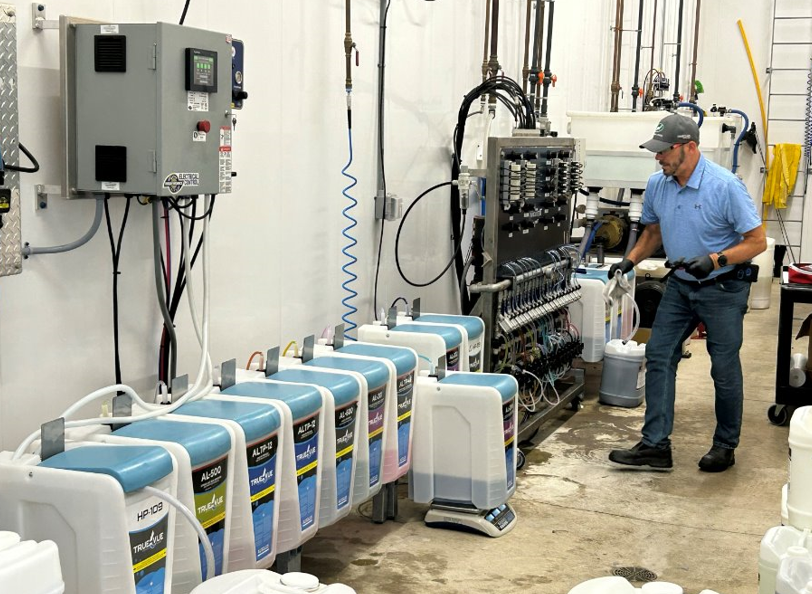
A new chemical needs to be installed and adjusted correctly before you judge its performance.
Work with your chemical supplier or a trained technician to set up the trial. Different products may need different application rates, equipment settings or handling procedures.
Follow chemical safety rules
Before changing products, review the manufacturer's instructions and Safety Data Sheet (SDS).
Use the required protective equipment and make sure the people handling the chemicals understand the process.
Never mix chemicals or allow old and new products to contaminate each other. Follow the proper line-flushing procedure when changing products. Some chemicals can react dangerously when mixed.
Check the application rate
The amount of chemical applied to each car has a major effect on both performance and cost.
Too little product may leave dirt behind. Too much may give you an impressive result that costs more than your wash can afford to use every day.
Follow the recommended application range for each product and verify how much chemical is actually being used.
Don't assume that the same volume of two different products makes a fair comparison. One chemical may be more concentrated than another.
For example, a new presoak might deliver the desired cleaning result at 30 mL per car, while your current product needs 40 mL. Both should be tested at properly adjusted rates.
The goal is to compare how each product performs when used correctly.
Keep other conditions as steady as possible
If you're changing a presoak, avoid making unrelated changes to the rest of the wash at the same time.
Pay attention to:
- Conveyor speed or in-bay wash settings.
- Water pressure, temperature and quality.
- Equipment condition and chemical application points.
- Other chemicals used before or after the product being tested.
- Weather and the types of dirt on incoming vehicles.
Some chemicals are designed to work as part of a larger program. Your supplier may need to adjust another product to get the intended result.
If that happens, record the change. You'll then know you're comparing two chemical setups, instead of pretending that only one product changed.

4. Run the Trial Under Normal Wash Conditions
Testing a chemical on a few clean vehicles may show you how it applies, but it tells you little about how it will perform over time.
Give the trial enough time to see a useful mix of vehicles and cleaning conditions.
A busy express tunnel may collect meaningful results over a shorter period than a slower in-bay automatic wash. There is no single number of vehicles that works for every trial.
Consider the types of conditions your wash handles.
For example, if you're testing a presoak during winter, try to include vehicles with typical road salt and grime. If you're testing a drying agent, pay attention to results as water and weather conditions change.
During the trial, record:
- The number of vehicles washed.
- The amount of chemical used.
- Any changes to equipment or chemical settings.
- Weather or soil conditions that could affect the result.
- Cleaning, drying or other problems noticed by staff.
Keep the test simple enough that your team will actually maintain the records.
If conditions change a great deal during the trial, be careful about comparing the results directly with your original baseline. A new chemical tested on heavily salted winter vehicles may appear worse than an old product measured during a mild week.
In that case, extend the test or gather another set of results under more similar conditions.
A fair comparison is more useful than a fast decision.
5. Judge the Finished Vehicle, Not Just the Wash Show
Thick foam, bright colors and strong scents can make a wash more appealing to customers. They may also help support the price of a premium package.
Those features serve a purpose, but they don't always tell you how well a chemical cleans, dries or protects a vehicle.
Look closely at the finished result.
For cleaning products
Check whether the new chemical improves cleaning in the areas that matter most.
Pay attention to lower body panels, wheels, rear surfaces and other places where your wash often leaves dirt behind.
Ask whether the product removes more soil under similar conditions and whether results are consistent across vehicles.
For drying agents
Look for water left on the vehicle after it leaves the drying area.
Check mirrors, windows, trim and other areas where water commonly collects. Look for spotting or residue as well as how much water remains.
Remember that drying also depends on rinse quality, equipment settings and the condition of your dryers.
For protectants and premium finishes
Check whether the product delivers the appearance and surface effect being promised.
Depending on the product, you might look at gloss, water beading, coverage or the experience customers see during the wash.
If you're testing a claim about how long protection lasts, you'll need to check vehicles over the claimed period. An immediate test can't prove long-term performance.
Record what you see instead of relying on memory. Photos and short inspection notes can help you compare the old and new results more fairly.
6. Calculate the Real Chemical Cost Per Car
One of the biggest mistakes in chemical purchasing is comparing products by container price alone.
A less expensive container may need a higher application rate. A more expensive concentrate may wash more vehicles before it needs to be replaced.
The useful comparison is how much each product costs to apply to one vehicle.
How to calculate cost per car
Use the amount of product consumed and the price you pay for it.
Chemical cost per car = Cost of chemical used ÷ Number of vehicles washed
If you already know the amount applied per vehicle, you can also calculate the cost from the product's price per litre or gallon.
Example: Comparing two presoaks
Imagine a wash testing a new presoak. These are sample figures, not actual product prices or recommended application rates.
- Current presoak: $10.00 per litre, 40 mL per car, for a cost of $0.40 per car.
- Trial presoak: $12.00 per litre, 30 mL per car, for a cost of $0.36 per car.
The new presoak costs more per litre, but its lower usage reduces chemical cost by $0.04 per vehicle.
At 2,000 vehicles per month, that would save $80 in monthly presoak costs, assuming the usage rates remain consistent.
That saving only matters if the new product provides the cleaning performance your wash needs.
If it leaves more road film and leads to extra rewashes, the lower chemical cost may not be worth it.
Also look for changes in labor, maintenance and water use. You don't need to put a dollar figure on every small difference, but you should consider any change that could meaningfully affect the business.
For a full chemical program, compare the total cost of all products used per car. Reducing the cost of one product doesn't help much if it causes you to spend more elsewhere in the wash.
7. Ask Your Team What They're Seeing
The people working at your wash can help identify problems that numbers alone may miss.
Employees may notice more dirty vehicles leaving the tunnel, new residue on equipment or changes in drying results. They may also hear complaints that never reach the manager.
Ask staff to report specific observations.
Instead of asking, "Do you like the new chemical?" try questions such as:
- Are more vehicles leaving with dirt in the same areas?
- Have you noticed a change in water left on vehicles?
- Are customers commenting on the finished result?
- Has the product caused any application or equipment problems?
- Are employees spending more time dealing with rewashes?
Collect feedback throughout the trial. Encourage staff to report problems as they happen, even when the new chemical initially seems promising.
Customer feedback can help, too.
One customer saying their car looks shinier is useful to hear, but it isn't enough to establish that the new product performs better. Look for repeated comments or a clear change in the number of complaints.
Use those observations alongside the performance and cost measurements you've collected.
8. Review the Results and Decide What to Do
When the trial ends, return to the goal you set at the beginning.
If you wanted better cleaning, did the new product improve the problem areas? If you wanted lower costs, how much did you save, and did wash quality stay at an acceptable level?
There are several possible outcomes.
Keep the new product: It meets your goal, performs consistently and offers enough benefit to justify the change.
Adjust and test again: The product shows promise, but the application rate or another setting needs work. Make the adjustment and record a new set of results.
Stay with your current product: The new chemical doesn't provide enough improvement, or it creates problems that outweigh its benefits.
Test under different conditions: The trial was affected by changes in weather, equipment or other factors that make the comparison unreliable.
There is value in each outcome.
A trial can confirm that your existing program is working well. It may also reveal an equipment or water-quality problem that changing chemicals alone won't solve.
You don't need to change products just because you've spent time testing them.
Keep a Simple Record of Your Trial
Before closing the trial, write down the key information in one place.
A basic record should include:
- Product and purpose: What was tested, and what problem were you trying to solve?
- Test conditions: Dates, wash type, equipment settings and important water or weather conditions.
- Application rates: How much of each product was used per vehicle?
- Cost comparison: What was the chemical cost per car before and during the trial?
- Wash results: What changed in cleaning, drying, complaints or other measures?
- Decision: Will you switch, adjust the product, test again or keep the current program?
If you decide to use the new product, save the settings that produced the best results.
Train the employees who will maintain the chemical system, and check product usage again after the change. A good result during a trial won't help much if the application rate gradually changes over the following months.
Make Your Next Chemical Decision With Confidence
A good chemical trial helps you understand exactly what a product can do in your wash.
Begin with a clear goal. Measure your current performance, set up the new chemical correctly and compare results under normal operating conditions. Check the finished vehicles and calculate what the product actually costs to use.
Your chemical supplier should be able to help with application settings, product selection and performance testing.
Turtle Wax Pro works with distributors and wash operators to help select, install and adjust chemical programs for their equipment and cleaning conditions. Our team can also help you review chemical usage and cost per car so you can make an informed decision.
The best outcome is a wash program you can trust, with results you can measure and repeat.


.jpg)


.jpg)


