Thanks for sharing your details! After our analysis, we are thrilled to inform you that Turtle Wax Pro can help you save @[savedAmount]$ per car compared to the competition.
Oops! Something went wrong while submitting the form.
What they say about us
I've Never Had A Quality Control Issue!
Liz Tilbury
Director of Operations at Splash2o
If you've been around one month or ten years TWP’s new learning center is an outstanding tool to help train your staff. This platform gave my team a better understanding of everything from basic wash principles, all the way to the advanced chemistry and how our products break down microscopic impurities on the vehicle surface and be able to pass this knowledge over easily to our customers. I use this platform as a regular training for any new hires as well as senior members of the team.
Gerald Patt
VP of Sales, USA
TX4 is Awesome! Since we've been using it we've been very very happy with it!
Brian Carroll
Co-Owner at Pure Clean Car Wash
The TWPLearn platform has been reviewed by our salesforce with very positive feedback. The detailed information presented has helped us to help our customers with proper chemical mixture, usage and promotion.
Mike Hansen
Sales Manager/Partner at Dultmeier Sales
Related Blog Posts
31
Aug
Car Wash Marketing
•
0 min read
The Hidden Cost of Competing on Price
No items found.
When competition gets tough, lowering your price can feel llike the easiest way to win customers. A competitor drops their wash price by $1. You match it. Another offers a discount. You offer one too.
Before long, everyone is competing on price, and everyone is giving up margin. The problem is that the lowest price does not always create the strongest business.
In fact, constantly competing on price can have hidden costs that are easy to miss.
The Price War Problem
Price is easy for customers to compare. They can see your $20 wash next to a competitor’s $19 wash and immediately understand the difference.
But they may not see everything that makes your wash different: better cleaning performance, better shine, better protection, better customer experience, stronger brand, faster service, better membership program, or a cleaner, more professional property.
When price becomes the main message, those differences can disappear. The customer starts asking one simple question:
“Who is cheaper?” That is a difficult game to win for long.
Lower Prices Can Mean Less Profit
Here is the part that is easy to overlook. If you lower your price by $2, you do not just lose $2 in revenue. You may also need more customers to make up for that lost revenue.
For example, imagine a wash sells 1,000 washes at $20 each. That creates: 1,000 × $20 = $20,000
Now imagine the price drops to $18. At the same number of washes:1,000 × $18 = $18,000
The wash needs to sell about 111 more washes just to recover that $2,000 difference.
That means more cars, more traffic, more wear on equipment and potentially more labor, just to get back to where you started. And that is before considering the cost of the discount itself.
The Cost of Cheap Can Show Up Somewhere Else
Price is only one part of the economics of a wash.
That is why looking only at the price of a product or service can be misleading.
Turtle Wax Pro has previously highlighted the importance of looking at cost per car, rather than simply looking at the price of a chemical container. A lower-priced product may require higher usage, more adjustments or more labour, which can increase thetrue cost of delivering the wash. The same idea applies to your customer pricing.
The cheapest price is not always the most profitable price.
Customers Will Pay for Value
Competing on price does not mean you should ignore what competitors charge. You need to know your local market. But there is a difference between knowing your competition and letting your competition set your entire strategy. Customers will pay more when they understand what they are getting in return.
A premium wash can offer: a deeper clean, better shine, water beading, surface protection, better drying and a more memorable tunnel experience.
Turtle Wax Pro’s approach to premium wash packages focuses on creating visible and meaningful benefits that customers can understand. When customers can see the difference, the upgrade becomes easier to justify.
The goal is simple:Give customers a reason to choose you that has nothing to do with being the cheapest.
Stop Selling Chemistry. Start Selling Results.
Most customers do not know what every chemical in a wash does. They do not need to. They want to know what they will get.
Instead of saying:“Our top package includes three additional chemical applications.”
Explain the result:“Our top wash gives your vehicle our best clean, enhanced shine and added protection.”
That is a much easier value story to understand. Customers are looking for results such as shine, protection, water beading and a cleaner, better-looking vehicle.
Your Brand Can Help You Escape the Price Trap
A recognizable brand can give customers another reason to choose your wash. When customers see a brand they know and trust, it can reinforce the idea that they are getting a quality product and experience. That is one reason Turtle Wax Pro places value on brand recognition as part of the overall wash experience.
A strong brand can help communicate: Quality. Consistency. Performance. Trust.
Those things are harder for a competitor to copy with a $1 discount.
The Goal Is Not to Be Expensive
There is an important difference between charging more and creating more value. You should not raise prices simply because you can. Instead, look at what you can improve:
Better chemistry → Better results
Better results → Better customer experience
Better experience → Stronger perceived value
Stronger value → More pricing power
That creates a much healthier business model than simply cutting prices whenever a competitor does.
Protect Your Average Revenue Per Car
One of the best ways to grow a wash is to increase the value of each customer visit.
Consider a simple example. A wash processes 10,000 cars per month. If the average customer spends $18, monthly revenue is $180,000. If improvements to package design, customer communication and premium wash adoption increase average revenue to $20, the same 10,000 cars generate: $200,000
That is an additional $20,000 per month without finding another 10,000 customers.
The numbers are only an illustration, but the principle is important:Growth does not always mean more cars. Sometimes it means creating more value from the cars you already have.
Ask Yourself One Question
The next time a competitor lowers their price, do not immediately ask:“How much do we need to lower ours?”
Ask: “Why should a customer choose us instead?” That question changes the conversation. It moves the focus from price to value. It encourages you to look at your chemistry, your wash packages, your customer experience, your branding and your marketing. And it helps you build something competitors cannot easily copy.
The Bottom Line
Price will always matter. Customers want a fair price and good value. But the lowest price should not be your only competitive advantage. Because once price becomes the reason customers choose you, you have to keep defending that price. A competitor can always go lower.
Instead, build a wash customers believe is worth more. Deliver better results. Create a better experience. Make your premium packages easy to understand. Use strong brands and clear messaging. Measure revenue per car, not just car count. And focus on the real cost of every decision.
Don’t race to the bottom. Build a wash customers are willing to pay more to experience. Because the cheapest wash may win a customer today.
The better wash is more likely to win them back tomorrow.
31
Aug
Car Wash Marketing
•
0 min read
The Economics of Customer Convenience
business owner
customer service
marketing
business plan
For today’s car wash customer, convenience is more than a nice extra. It is part of the value they are paying for.
Customers want a clean car, but they also want the process to be easy. They want to get in, get washed and get back on the road without unnecessary waiting, confusion or extra steps. For car wash operators, this creates an important business opportunity: Convenience can drive customer loyalty, increase visits and create more revenue.
Convenience Has Real Value
Think about the last time you chose where to get gas, coffee or food. Price matters, but it is not always the deciding factor. Sometimes, the easiest option wins. The same is true for car washing.
A customer may choose one wash over another because:
It is on the way to work.
The entrance is easy to find.
The line moves quickly.
Payment is simple.
They can use a membership.
They know exactly which wash to choose.
They can vacuum their car after the wash.
They can manage their account online.
Each of these details removes a small amount of effort from the customer’s day. When enough of those small improvements come together, they create a better experience.
Convenience Can Help You Keep Customers
A great wash brings customers in. A convenient wash gives them a reason to come back.
This is especially important for membership programs. Memberships make regular washing easier because customers do not need to make a new purchase every time they visit. Instead, they can simply arrive, wash and leave.
Turtle Wax Pro has long highlighted convenience as one of the key benefits of car wash memberships. Customers can save money while making regular washing easier and more predictable. That matters because habits are powerful.
If your wash becomes the easiest place for a customer to keep their vehicle clean, they have less reason to look elsewhere.
Every Extra Step Has a Cost
Customers may not complain about every small inconvenience, but they notice them.
Consider a customer who has to:
Find the right lane.
Figure out the menu.
Wait to pay.
Enter payment information.
Choose a wash they do not fully understand.
Wait again.
Find a place to vacuum.
Figure out how their membership works.
None of these steps is a major problem by itself. Together, they can make the experience feel harder than it needs to be. That is why convenience should be designed into the entire customer journey.
Convenience Can Increase Revenue
Here is where convenience becomes an economic opportunity. When customers understand your wash options, they can make decisions faster. When payment is easy, more customers can complete a purchase. When memberships are simple to use, customers are more likely to see their membership as valuable. When premium packages are easy to understand, customers may be more willing to upgrade.
In other words:Less friction can mean more completed purchases.
The goal is not to make customers spend more. The goal is to make it easier for customers to understand and choose the value you already offer.
Convenience Is More Than Speed
Speed is important, but convenience goes beyond getting through the tunnel quickly. A convenient car wash should feel simple from beginning to end.
Before the wash, customers should be able to quickly understand:
Where to enter
Which lane to use
What each wash includes
How much it costs
Which option is right for them
During the wash, the experience should be easy and predictable. Customers should know what to expect and see the value of the wash as it happens. Premium foam, shine, protection and other visible effects can help customers understand that they received something more than a basic wash.
After the wash, the experience should not suddenly stop when the car leaves the tunnel. Vacuum areas, towels, interior-care products and other services can extend the customer’s visit and add value.
The vacuum area, in particular, can become an important part of the customer experience. Turtle Wax Pro has explored how premium detailing products in this space can give customers more ways to care for their vehicles while creating new revenue opportunities for operators.
The Economics of Small Improvements
Convenience does not always require a major investment. Sometimes the biggest improvements are simple: A better sign can help customers find the entrance. A clearer menu can help customers choose faster. Better payment options can reduce friction. A well-designed site can make traffic flow easier. A membership program can remove the need to pay for every visit. A clean, well-maintained vacuum area can make the entire experience feel more complete.
Each improvement may seem small. But small improvements can add up across thousands of customer visits. That is the economics of convenience.
Convenience Can Support Premium Pricing and Create Habits
Convenience can also change how customers think about price. Imagine two washes charging similar prices.
One has confusing signs, slow payment and a difficult layout. The other is easy to find, easy to understand and easy to use.
The second wash may feel like the better value, even if the price is the same. This is important when selling premium wash packages.
Customers need to understand what makes the premium option worth more. A strong package combines performance with an experience customers can see and understand.
One of the biggest economic benefits of convenience is repeat behavior. When something is easy, people tend to do it more often. That is especially useful for car washes.
A customer who thinks, “I should wash my car,” may put it off if the process feels difficult. A customer who thinks, “I’m already driving past my wash and it only takes a few minutes,” is more likely to stop.
That difference can affect visit frequency, membership value and long-term customer retention.
Look at Your Wash Through the Customer’s Eyes
Operators spend a lot of time thinking about equipment, chemistry, labour and maintenance. Those things are critical.
But it is also important toexperience the wash as a customer.
Try this: Drive into your property as if you have never been there before.
Ask yourself:
Can I immediately tell where to go?
Can I understand the wash menu in a few seconds?
Is it easy to pay?
Do I know what I am getting?
Does the premium package look worth the upgrade?
Is the tunnel experience clear and enjoyable?
Is it easy to leave?
Can I easily finish caring for my vehicle?
Every point where you hesitate is an opportunity to improve convenience.
The Bottom Line
Customer convenience is not simply about making people happy. It can have a direct impact on the economics of a car wash.
A convenient experience can help: Attract customers → Increase visits → Improve upgrades → Support memberships → Build loyalty
The best operators understand that customers are not only buying a clean car. They are buying back a little bit of their time. And time has value.
When a car wash makes the entire experience simple, fast and enjoyable, convenience becomes part of the product.
The easier you make it to choose you, use you and return to you, the more valuable your wash can become.
That is the real economics of customer convenience.
27
Jul
Car Wash Operations
•
0 min read
The Subscription Ceiling: Where Does Car Wash Growth Come From After Membership Matures?
business plan
memberships
marketing
loyalty
For more than a decade, one answer has dominated almost every conversation about growing a car wash:
Sell more unlimited memberships.
It has been good advice.
Membership programs transformed car washing from a largely transactional, weather-sensitive business into one with predictable recurring revenue. They gave operators a more direct relationship with their best customers, encouraged more frequent visits and made financial performance more stable.
The latest industry data confirms that memberships remain essential. In the first quarter of 2026, membership revenue across more than 3,000 car wash locations increased 10.6% year over year, while retail revenue declined 3.3%. At mature locations, membership revenue still increased 5.52%, while retail revenue declined 4.44%.
No serious operator should interpret those numbers as an argument against membership growth.
But every successful growth model eventually becomes harder to scale.
A wash cannot convert more than 100% of its available customers. Long before reaching that theoretical limit, the cost and effort required to acquire each additional member begin to rise. The easiest customers have already converted. Competitors are pursuing many of the same households. Promotions attract increasingly price-sensitive customers. New memberships begin replacing cancellations rather than meaningfully expanding the total base.
Eventually, operators encounter what we might call the subscription ceiling.
That ceiling does not mean membership sales have stopped. It means acquiring more individual members is no longer the easiest or most profitable source of growth.
At that point, the strategic question changes.
It is no longer simply: How do we sell more memberships?
It becomes: How do we create more value from the customers, households, vehicles and property we already have?
Membership maturity is not the end of growth. It is the point where growth becomes more sophisticated.
What Is the Subscription Ceiling?
The subscription ceiling is not a universal number.
There is no single percentage of local households or retail customers at which every car wash has “enough” members. Each site will have a different practical ceiling based on its market, location and operating model.
Factors include:
Population density and household vehicle ownership.
Local competition and market saturation.
Site visibility and convenience.
Consumer income and price sensitivity.
The strength of the operator’s brand.
The number and geographic distribution of locations.
Wash quality and customer satisfaction.
Membership pricing and package architecture.
An operator does not need to exhaust the market to reach the subscription ceiling.
The ceiling may appear when acquisition costs increase, introductory discounts become less effective or churn begins offsetting most new sales. A wash may continue selling hundreds of memberships while producing very little net membership growth.
Imagine a location that sells 500 memberships during a quarter but loses 450 existing members.
The wash technically added 500 members. In practical terms, however, it spent three months of marketing effort, promotional discounts and employee sales activity to grow its base by only 50.
That is why gross membership sales can become a misleading success metric.
The subscription ceiling is not where membership sales stop. It is where membership acquisition stops being the simplest path to profitable growth.
Growth Lever One: Protect the Revenue You Already Have
When membership growth begins to mature, retention becomes just as important as acquisition.
Those percentages can look relatively small until they are applied to a mature membership base.
Rinsed has previously reported a median membership count of 2,875 for locations operating for at least 30 months. Using that membership count and the more recent 7.3% churn benchmark as an illustrative example, a mature site could lose approximately 210 memberships in a single month.
At an average monthly member revenue of approximately $30, those cancellations represent more than $6,000 in recurring monthly revenue that must be replaced simply to prevent the membership base from shrinking.
Reducing churn from 7.3% to 6% at that same illustrative site would retain approximately 37 additional memberships each month. At $30 per membership, that represents roughly $13,500 in annualized recurring revenue at the initial monthly level—before considering the longer-term value of those retained relationships.
That may be achievable without adding one new customer to the property.
It requires operators to recognize that churn normally begins before a member formally cancels.
The early warning signs may include:
Fewer visits.
Longer gaps between visits.
Repeated rewash requests.
Reduced app engagement.
Unresolved complaints.
Failed payment events.
A customer no longer using premium benefits.
A sudden change in visit behaviour.
Operators should also separate voluntary churn from involuntary churn.
A customer who actively cancels because of price, quality or convenience requires a different response from a customer whose membership lapses because a credit card expired.
Both result in lost recurring revenue, but only one necessarily represents a deliberate rejection of the wash.
Failed-payment recovery, proactive card-update reminders and simple account-management tools can address involuntary churn. Reducing voluntary churn requires operators to examine the entire membership experience: wash performance, uptime, employee interactions, service recovery, convenience and perceived value.
Retention is not exclusively a marketing responsibility.
Marketing can remind customers why they joined. It cannot indefinitely compensate for inconsistent cleaning, weak drying, equipment downtime or a frustrating customer experience.
Growth Lever Two: Expand From One Vehicle to the Household
Once the most obvious individual customers have been converted, the next membership opportunity may already be parked in their driveway.
Most car wash memberships remain structured around one customer, one license plate and one recurring payment. Yet most American households have access to more than one vehicle.
In 2023, 37% of U.S. households had two vehicles available and another 22% had three or more. Combined, approximately 59% of households had at least two vehicles.
That creates an important strategic distinction:
An operator may have successfully acquired a customer without fully acquiring the household.
The second vehicle may currently be:
Washed at a competitor.
Washed infrequently.
Cleaned at home.
Used by a spouse or another family member.
Considered too lightly used to justify a full-price unlimited plan.
The answer is not necessarily to sell two identical memberships at two identical prices.
Operators can test structures such as discounted second-vehicle memberships, household billing, family plans, limited-frequency secondary plans or tiered packages that allow different vehicles to receive different services.
AMP’s membership data reports that multi-vehicle members produce approximately twice the monthly revenue per member and experience 39% lower churn per vehicle plan than single-vehicle members.
That retention advantage makes intuitive sense.
A customer with one enrolled vehicle can switch washes relatively easily. A household with several vehicles, one bill and shared benefits has a more deeply integrated relationship with the operator.
A competitor is no longer attempting to replace one wash membership. It must replace a household solution.
The next phase of membership growth may therefore come less from finding another individual customer and more from serving additional vehicles belonging to customers the wash already knows.
Growth Lever Three: Increase Membership Value, Not Just Membership Price
When operators want more revenue from an established membership base, the most obvious option is a price increase.
Sometimes that is the right decision. Membership prices cannot remain static while labour, utilities, chemistry, equipment and property costs increase.
But a broad price increase is not the only way to improve member revenue.
Operators can also give customers a meaningful reason to voluntarily choose a higher-value membership.
That begins with stronger package architecture.
A premium membership should not simply be a longer list of chemical applications. Most customers do not understand the technical differences between every detergent, polish, sealant and protectant used in a tunnel.
They understand outcomes:
A cleaner vehicle.
Better shine.
Stronger water beading.
Improved drying.
Longer-lasting protection.
Easier vehicle maintenance between washes.
A more complete interior and exterior experience.
The technical performance, package name, signage, employee explanation, visible show inside the tunnel and final result all need to reinforce the same promise.
There is evidence that membership customers will choose a premium tier when the value is communicated effectively.
In one documented case, WASHGUYS worked with DRB and SUDS on its pricing and package structure. Selection of the operator’s top retail package increased from 13% to 42%, while top-package penetration among members increased from 55% to 74%.
That result should not be treated as a universal industry benchmark. Every market, menu and price structure is different.
It does demonstrate that package mix is not fixed.
Operators can materially influence premium adoption through the interaction of pricing, presentation and perceived value.
The goal should not be to disguise a price increase inside a complicated membership tier. It should be to create a premium outcome that customers can recognize, understand and willingly select.
Growth Lever Four: Monetize More of the Property
Membership growth has traditionally been tied to the tunnel.
The customer purchases exterior cleaning. The wash delivers the service. Free vacuums and related amenities support the overall value proposition.
But the customer journey does not always end at the tunnel exit.
For many customers, the vacuum area is where they spend the most time actively thinking about the condition of their vehicle. They open the doors, inspect the exterior, clean the mats, wipe the dashboard and notice the details that were not part of the automated wash.
That makes the vacuum area more than an amenity.
It is a high-intent car-care environment.
Operators should begin evaluating revenue not only per car or per membership, but also per:
Customer.
Household.
Visit.
Square foot.
Minute spent on the property.
The tunnel monetizes the exterior wash. The vacuum lot may be able to monetize the next stage of vehicle care.
Creating a Premium Interior-Care Tier
One opportunity is to offer access to upgraded interior-care products and equipment as part of a premium membership tier.
Depending on the site, this could include:
Interior-surface cleaners.
Glass cleaners.
Dashboard and trim products.
Towels.
Mat-cleaning equipment.
Compressed air.
Fragrance options.
Tire and exterior finishing products.
This does not require eliminating free vacuums or placing every amenity behind a paywall.
A wash can preserve a strong complimentary baseline while creating a noticeably better premium experience for customers who want to complete more of their car-care routine on-site.
Early Turtle Wax Pro customer research found that members would consider paying an additional $5 to $10 per month for access to premium detailing products in the vacuum area.
At the midpoint of that range, the potential becomes meaningful quickly.
A $7 monthly upgrade purchased by 1,000 members would generate $84,000 in incremental annual revenue before product, equipment, labour and maintenance costs.
That revenue comes from the existing site and existing member base. It does not require another tunnel, another parcel of land or thousands of incremental cars.
Turning Product Trial Into Retail Sales
The vacuum area can also create direct retail revenue.
Customers can use a product on-site, see the result and purchase the same or a complementary product to use at home.
That creates a natural customer journey:
Wash the vehicle exterior.
Complete the interior and finishing work.
Experience the product.
Purchase it for future use.
The goal is not to transform the vacuum lot into a cluttered retail store.
The strongest programs will likely be simple: a limited number of relevant products, clear instructions, controlled dispensing, visible take-home options and an easy purchasing process.
Operators must still account for shrinkage, product waste, equipment durability, site cleanliness, customer flow and longer vacuum dwell times.
Any new revenue program should improve site economics without creating enough operational complexity to erase the benefit.
The larger point remains important:
Free vacuums helped operators sell the first generation of memberships. A more complete car-care experience could help sell the next.
Growth Lever Five: Serve Customers Who Do Not Fit the Standard Unlimited Plan
Membership maturity can also reveal a weakness in the traditional model: not every valuable customer wants or needs an unlimited individual plan.
Some customers will never wash frequently enough to justify one. Others require different billing, reporting or access structures.
That creates opportunities in several underserved segments.
Commercial and Fleet Customers
Real estate companies, home-service businesses, dealerships, delivery operators, trades, municipal departments and other organizations often need clean vehicles.
But they may not want dozens of disconnected consumer memberships.
A useful commercial program may require:
Centralized billing.
Vehicle-level reporting.
Multiple authorized drivers.
Usage controls.
Wash-frequency limits.
Access across multiple locations.
Different service levels for different vehicles.
The opportunity is not simply to sell several retail memberships. It is to create a commercial account product that solves an operational problem for the customer.
Low-Frequency Retail Customers
A customer who will not purchase unlimited washing can still be worth retaining.
Multi-wash packs, seasonal passes, prepaid bundles and loyalty programs can create repeat behaviour without requiring a full subscription commitment.
Trying to force every customer into the same product may create unnecessary resistance. A broader product ladder allows the operator to capture value from different washing habits.
Former Members
Cancelled members also deserve their own strategy.
Some left because they moved. Others experienced a service problem, changed vehicles, reduced their driving or no longer washed frequently enough to justify unlimited access.
Those customers may still respond to:
Seasonal reactivation.
Lower-frequency plans.
Retail loyalty offers.
Household alternatives.
Limited-use memberships.
Upgraded benefits that address the reason they left.
Membership maturity should lead to better segmentation, not increasingly aggressive attempts to push every customer into the same unlimited plan.
Growth Lever Six: Expand the Utility of the Membership
For multi-site operators, convenience can become a competitive moat.
A membership that works near home, near work and across a wider travel area offers more value than one connected to a single location.
Cross-location access can also support household and fleet plans. Different drivers and vehicles can use the location most convenient to them without managing separate relationships.
This creates a second-order benefit when evaluating expansion.
A new site does not generate value only through customers living near that property. It may also make every existing membership more useful.
The traditional expansion question is: How many new memberships will this location sell?
A more complete question is: How much more valuable will this location make the memberships we already have?
Network utility can improve acquisition, reduce churn and make the overall customer relationship harder for a smaller competitor to replace.
The Post-Subscription Growth Model
The mature car wash growth model is not built around abandoning memberships.
It is built around placing more revenue strategies on top of them.
A practical post-subscription growth model has six layers:
1. Protect the Base
Reduce voluntary churn, recover failed payments, improve wash consistency and resolve customer problems before they become cancellations.
2. Expand the Household
Enroll additional vehicles, create family plans and make billing simpler for multi-vehicle customers.
3. Increase Membership Value
Improve premium-package adoption by offering clear, recognizable outcomes rather than a confusing collection of applications.
4. Monetize the Property
Use the vacuum area and other underutilized spaces to introduce premium amenities, interior-care access and relevant retail products.
5. Expand the Audience
Create offers for fleets, businesses, seasonal users, former members and low-frequency customers.
6. Expand Utility
Use multi-location access, shared household benefits and better digital account management to make the membership more useful and more difficult to replace.
None of these strategies eliminates the need to acquire new members.
They reduce the pressure on acquisition to carry the entire growth plan.
Membership Maturity Is a Milestone, Not a Warning Sign
Memberships will remain the economic foundation of many successful car wash businesses.
But operators cannot assume that the strategy used to build the first several thousand members will create the next stage of growth.
Eventually, the easiest customers have already joined. Competitors pursue the same remaining prospects. Discounts become less effective. Churn becomes more financially significant. The property must produce more value, and the customer relationship must extend beyond one vehicle and one tunnel visit.
The strongest operators will stop viewing growth as a straight line from retail customer to unlimited member.
They will build several connected relationships:
One customer to multiple vehicles.
One membership to more services.
One visit to additional purchases.
One location to a wider network.
One exterior wash to a complete car-care experience.
The subscription ceiling is only a ceiling if membership is the only product an operator knows how to sell.
For washes prepared to improve retention, expand the household relationship, strengthen premium packages and create new value across the property, it can become the floor for the next stage of growth.
Build More Value Into Every Membership
Growth after membership maturity requires more than another promotion. It requires a customer experience capable of supporting stronger retention, premium-package adoption and new revenue opportunities throughout the site.
Turtle Wax Pro helps operators create that experience through premium car wash chemistry, recognizable consumer branding, on-site marketing support and car-care solutions designed to extend value beyond the basic wash.
The goal is not simply to wash more cars.
It is to make every customer relationship more valuable.
26
Jun
Car Wash Chemicals
•
0 min read
How to Design a Premium Wash Package That Drives Revenue
memberships
pricing
marketing
advertising
For many car wash operators, increasing revenue isn't always about washing more cars. Often, the biggest opportunity lies in creating a premium wash package that customers are excited to purchase.
A well-designed premium package delivers more than just a clean vehicle. It creates an experience that customers can see, feel and understand. When done correctly, premium packages can increase average ticket values, improve customer satisfaction and help build long-term loyalty.
So what separates an average premium package from a great one?
Let's break down the key ingredients.
Start with Exceptional Cleaning
No amount of shine, color, or protection can make up for a vehicle that isn't clean.
The foundation of every premium wash package should be a powerful cleaning process that effectively removes road film, dirt, bugs and contaminants before the customer reaches the finishing stages.
This begins with quality presoak chemistry. Products like Turtle Wax Pro's One Shot High pH Presoak are designed to tackle challenging soils and adapt to varying cleaning conditions, helping operators maintain consistent results throughout the year.
Remember, customers may purchase the top package because of the shine and protection, but they'll only come back if the vehicle is truly clean.
Create a Visual Experience
Today's customers expect more than just functionality. They want an experience.
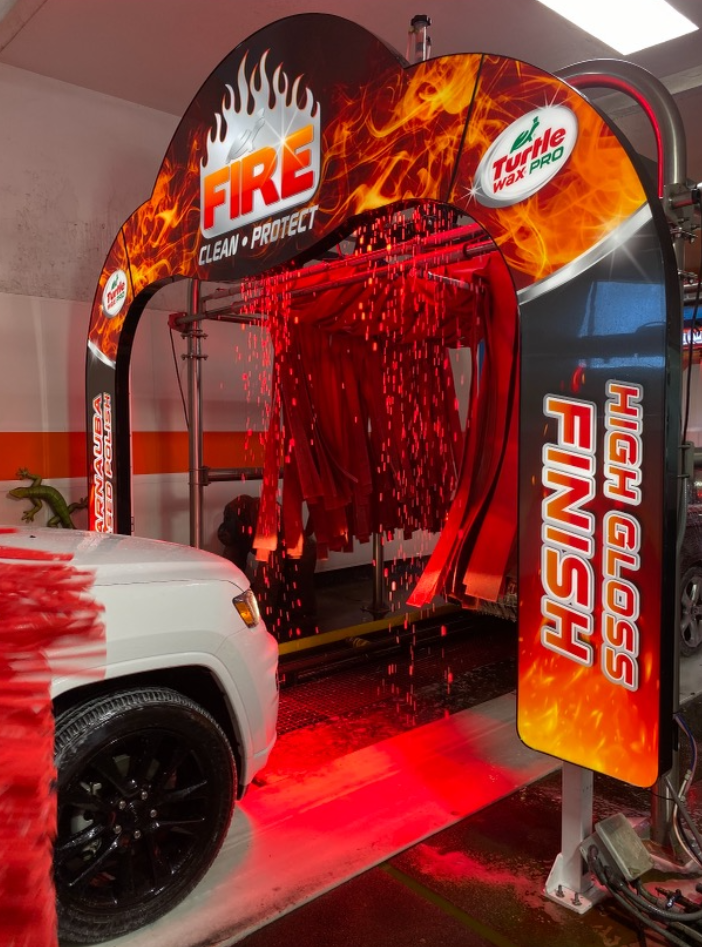
One of the easiest ways to add perceived value is by incorporating visually appealing products into the wash process. Vibrant triple foams, colorful lava applications and eye-catching foam displays help customers recognize that they are receiving something special.
Products like Turtle Wax Pro's Triple Shine and other premium foam applications can transform a routine wash into a memorable experience. Many successful operators use Triple Shine as a centerpiece of their premium package marketing because it creates a memorable moment during the wash process. When customers see vibrant foam cascading over their vehicle, it reinforces the perception that they are receiving a more advanced and comprehensive service than a standard wash.
In a competitive market, creating these memorable experiences can help differentiate your wash, encourage repeat visits, and increase premium package conversions. After all, customers are more likely to purchase an upgrade when they can clearly see the difference for themselves.
Add Meaningful Protection
Road salt, UV rays, acid rain, bird droppings, tree sap, and environmental fallout can all take a toll on a vehicle's finish over time. Premium protectants and sealants create a barrier between the vehicle's surface and these contaminants, helping maintain gloss and making future cleaning easier.
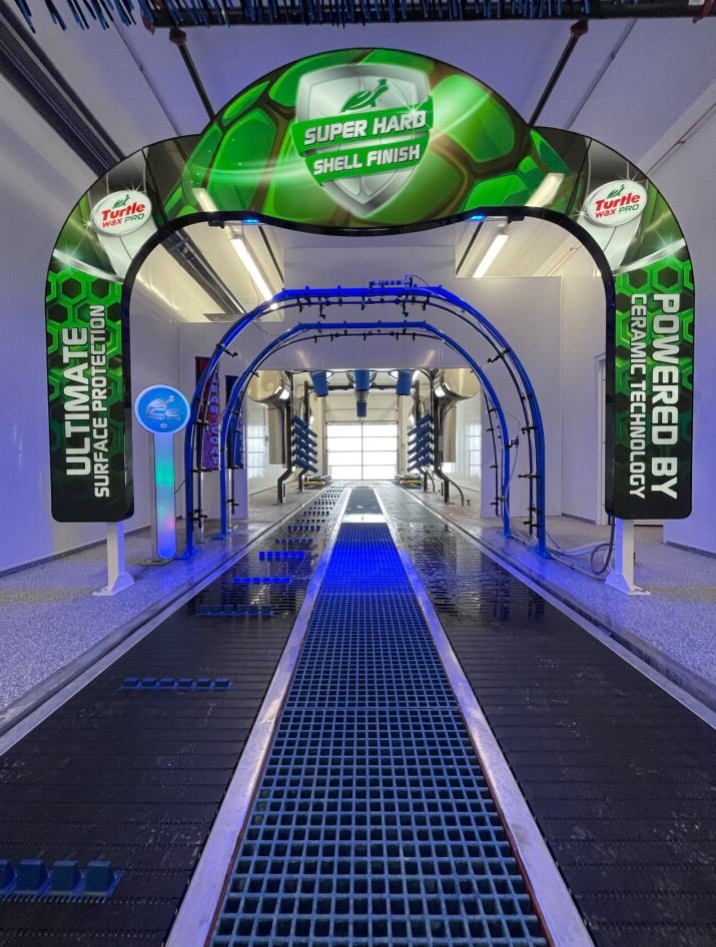
This is where high-performance products become an important part of the wash package. Products such as Turtle Wax Pro's Super Hard Shell Finish and Ice Instant Shine are designed to enhance shine while providing protective benefits that customers can see and appreciate. Together, these products help create a slick, protected surface that promotes water beading and helps repel dirt between washes.
For operators, protection products also create an opportunity to tell a stronger value story. Rather than simply selling a wash, you're selling vehicle care. Customers who understand that their premium package helps preserve their vehicle's appearance are often more willing to upgrade and more likely to become repeat purchasers.
Focus on Shine and Water Beading
One of the most satisfying moments for customers is seeing their vehicle leave the wash looking glossy and polished.
Shine is often the feature customers use to judge the quality of a wash. A vehicle that sparkles in the sunlight immediately reinforces the value of the premium package. In many cases, customers may not remember every step of the wash process, but they will remember how their vehicle looked when they drove away.
Products such as Ice Instant Shine help create a brilliant finish while enhancing water repellency. Combined with quality drying agents and protectants, operators can deliver the clean, dry, shiny result that customers expect from a top-tier package.
Water beading is another highly visible indicator of quality. Customers love seeing water quickly form tight beads and roll off their vehicle during rainstorms or future washes. This hydrophobic effect not only looks impressive but also helps demonstrate that the protective products included in the wash package are working.
When customers continue to notice water beading days or even weeks after their visit, it serves as a reminder of the value they received. These visible results can help build trust in your premium package and encourage repeat purchases. Shine and water beading also create excellent opportunities for upselling. Unlike some wash benefits that are difficult for customers to understand, gloss enhancement and hydrophobic performance are easy to see and appreciate. Operators can use menu boards, signage, and marketing materials to showcase these benefits and clearly communicate why the top package delivers a superior experience.
Deliver Outstanding Drying Performance
Nothing ruins a premium wash experience faster than excess water left on the vehicle.
A strong premium package should include products specifically designed to improve water breakage and drying performance. Effective drying chemistry not only improves vehicle appearance but also reduces customer complaints about spotting, streaking, and water residue.
Today's customers expect to leave the wash with a vehicle that looks showroom-ready. Even if the vehicle is exceptionally clean, lingering water droplets can diminish the overall perception of quality. That's why the drying stage is one of the most important components of a premium package.
Effective drying begins long before the final rinse. The best wash packages use a combination of cleaners, conditioners, protectants and sealants that prepare the vehicle's surface throughout the wash process. By the time the drying agent is applied, the surface is optimized to allow water to sheet, bead, and release more effectively.
Products within the Turtle Wax Pro lineup are designed to work together as part of a complete wash system. Solutions such as Super Hard Shell Finish and the Titanium TX4 process help create a slick, hydrophobic surface that encourages water to evacuate quickly from the vehicle. This improves dryer performance and contributes to a cleaner, more polished final result.
Strong drying performance offers benefits for both customers and operators. Customers appreciate driving away in a vehicle free of excessive water spotting, while operators benefit from fewer re-washes, reduced customer concerns and greater confidence in the quality of their wash package.
Support the Package with Strong Marketing
Even the best premium wash package won't sell itself.
Operators often spend significant time selecting the right chemistry and wash configuration but overlook the importance of marketing the package effectively. A premium wash can only drive revenue if customers understand why it is worth choosing.
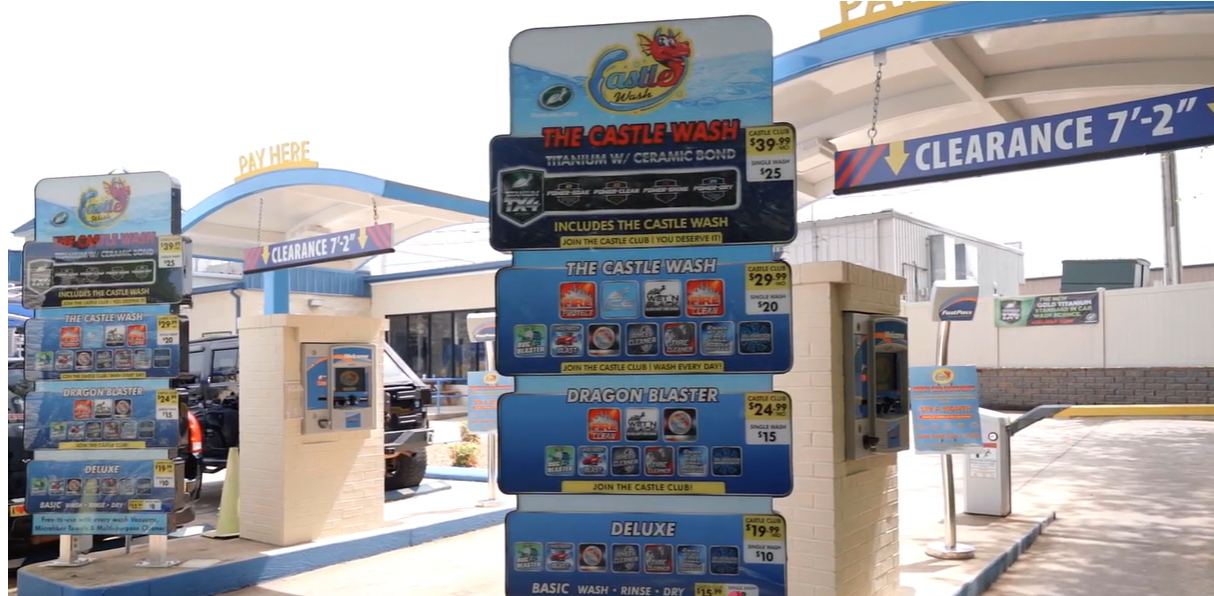
Start with a simple, easy-to-read wash menu. Avoid overwhelming customers with too many options or complicated descriptions. Instead, clearly communicate what makes the premium package different from lower tiers and highlight the most desirable benefits.
Consider emphasizing features like:
Long-lasting protection
Enhanced shine
Ceramic technology
Superior water beading
The cleanest, driest vehicle possible
Using recognizable brands can also strengthen your marketing efforts. Consumers are naturally drawn to brands they know and trust. Featuring the Turtle Wax Pro name throughout your site, menu boards and promotional materials can help reinforce quality and credibility while giving customers additional confidence in their purchase decision.
Marketing should extend beyond the wash menu as well. Social media, email campaigns, digital advertising, website content, and on-site signage can all be used to educate customers about the benefits of your premium package. Videos showing colorful Triple Shine foam, impressive water beading, or a glossy finished vehicle can be particularly effective at driving upgrades.
Membership programs also play an important role. Positioning the premium package as the best value option within an unlimited wash program can encourage customers to experience the full benefits of your top-tier offering on every visit. Once customers become accustomed to the results, they are often less willing to downgrade.
Finally, don't underestimate the importance of your staff. Team members who understand the benefits of the premium package can help educate customers and confidently recommend upgrades when appropriate.
The Bottom Line
Building the best premium wash package is about more than simply adding products to a menu. It's about creating a complete experience that delivers visible value at every stage of the wash process.
The most successful premium packages combine five key elements:
Powerful cleaning performance
Eye-catching visual appeal
Meaningful vehicle protection
Exceptional shine and water beading
Outstanding drying performance
When these elements work together, customers receive a wash that looks better, lasts longer, and feels worth the upgrade.
At the end of the day, customers don't buy chemistry—they buy results. When your premium package consistently delivers a cleaner, shinier, drier, and better-protected vehicle, you've built a package that customers will happily choose again and again.



.jpg)